When the gala ends, where do the signed pledge cards go?
The gala was a success. The room was full, the speeches landed, and by the end of the night there is a pile of signed pledge cards, a few sponsorship agreements, some vendor paperwork, and a stack of forms. Everyone is exhausted and elated, and all of that paper goes into someone’s bag to be dealt with later.
Later is where event documents go to die.
Weeks after, the pledges are being reconstructed from a spreadsheet, a sponsorship term is being remembered rather than read, and a couple of signed cards have quietly vanished. The event raised the money. The documentation of the money is scattered.
An event is a document factory nobody staffs for
We plan events meticulously: the venue, the program, the ask, the follow-up. What almost nobody plans for is the paper the event produces. And events produce a lot of it: signed pledge cards that commit real money, sponsorship agreements with real terms, vendor and venue contracts, consent and registration forms. Every one of those is a document that matters, generated in a chaotic few hours by people focused on running the event, not filing.
So the documents scatter by default. They land in bags, inboxes, and memories, disconnected from the donors and the event they belong to. The registration system knows who attended; it does not hold the signed pledge card. The paper that represents the actual commitments is the least organized output of the whole night.
Capture at the source, before it scatters
The fix is to have a place for event documents to go the moment they exist, rather than a plan to sort them “later.” Events are a source of documents, and the goal is to route that source into the record before the pile forms.
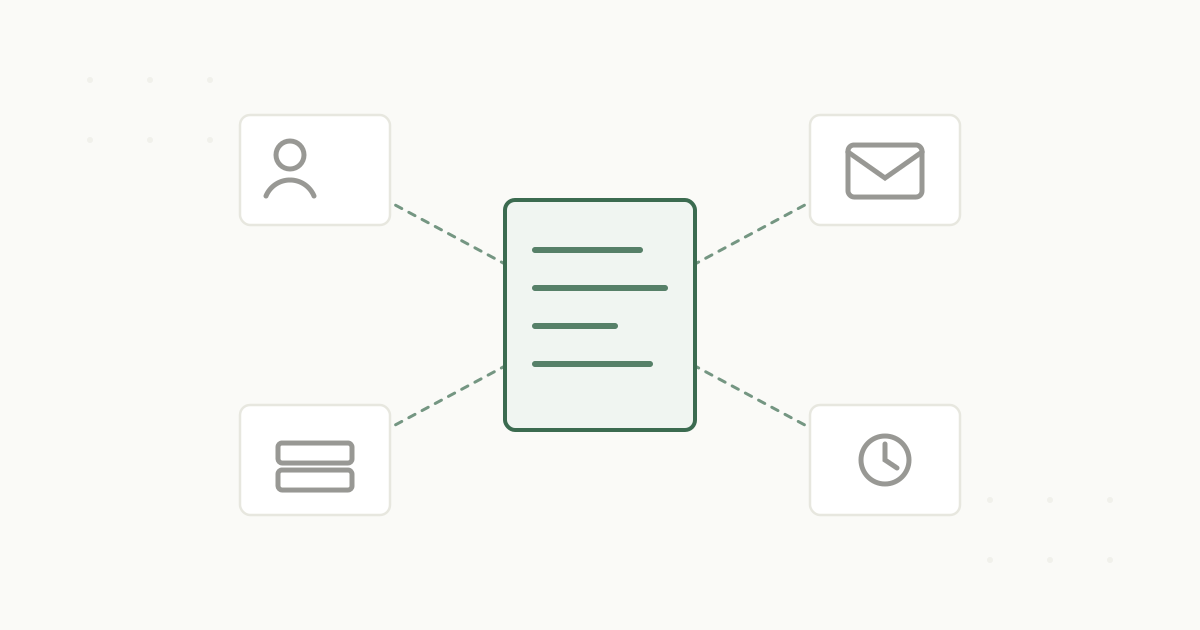
In practice, the signed cards and agreements come in by scan or by forwarding to an intake address, and intake reads each one and files it against the event and the donor it concerns. The signed pledge card from table nine becomes part of that donor’s record, attached to the gala, instead of a photo on someone’s phone. The sponsorship agreement lands with the sponsor, its terms tracked rather than remembered.
The night produces paper
Pledge cards, sponsorship agreements, vendor contracts, forms.
Capture at the source
Cards and agreements come in by scan or by forwarding to an intake address.
Intake reads and files
Each document lands on the donor and the event it concerns.
Terms get tracked
Pledge schedules and sponsorship obligations become dates with reminders.
The night produces paper
Pledge cards, sponsorship agreements, vendor contracts, forms.
Capture at the source
Cards and agreements come in by scan or by forwarding to an intake address.
Intake reads and files
Each document lands on the donor and the event it concerns.
Terms get tracked
Pledge schedules and sponsorship obligations become dates with reminders.
The shift is from “collect it all and sort it later” to “capture each document into the record as it comes in.” Later never comes; the record is built as you go.
Why the commitments especially matter
Pledge cards are the sharp case, because they are promises of money that the institution will spend the next year trying to collect. A pledge card that scatters is a commitment you now have to reconstruct, chase, and hope you got right. A pledge card captured onto the donor’s record, with its schedule tracked, is a commitment the system will remind you about at the right time, so the reminder that eventually reaches the donor is accurate and warm rather than a guess.
The difference between those two outcomes is decided in the hours right after the event, by whether there was a place for the paper to go.
Plan for the paper next time
The practical takeaway is to treat event documentation as part of event planning, not an afterthought. Decide in advance how the signed cards and agreements will get captured, ideally into the record the same week, and make it someone’s job. A little structure at the source prevents the reconstruction project later.
The gala is worth doing well right through the paperwork. The commitments made that night deserve to survive the night. See how event documents fit the gift agreement workflow and the Eventbrite integration, or read three automations every advancement office should run first. When you want to see it, book a demo.