Three automations every advancement office should run first
When people hear “automation,” they picture something elaborate: complex rules, a consultant, a project. So they either avoid it entirely or overbuild it. The truth is that most of the value comes from a handful of simple, boring automations, and an advancement office can get most of the benefit from just three.
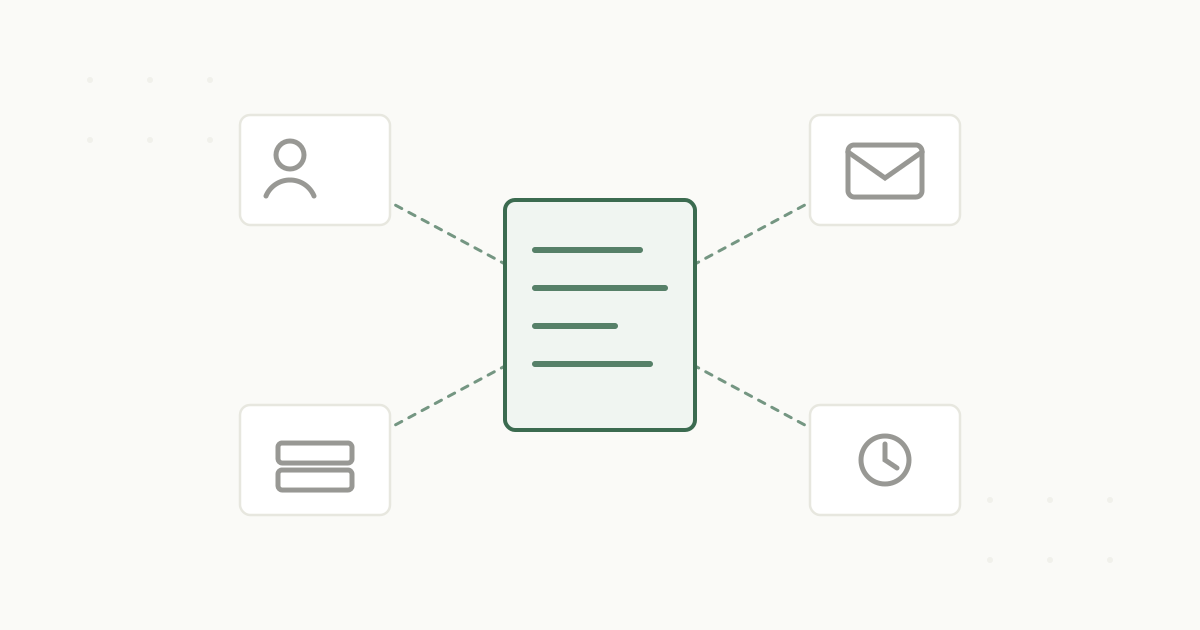
Here are the three to run first. Each one is a rule you could read aloud and understand, each removes a specific kind of manual drudgery, and none of them touch a document’s contents.
File the obvious
When a routine document arrives, intake files it on the matching record.
Remind before deadlines
When a tracked obligation is coming due, the responsible person hears in time to act.
Notify the owner
When a document lands on a record an officer owns, they find out where they already work.
File the obvious
When a routine document arrives, intake files it on the matching record.
Remind before deadlines
When a tracked obligation is coming due, the responsible person hears in time to act.
Notify the owner
When a document lands on a record an officer owns, they find out where they already work.
One: file the incoming document automatically
The first automation handles the most common, most tedious task in any document-heavy office: filing what comes in. Written plainly, the rule is “when a document like this arrives, file it on the matching record.”
Most incoming documents are routine and predictable. A signed gift agreement arrives; it belongs on the donor. A vendor contract comes in; it belongs on the vendor. Having a person sort each one is a waste of judgment on a task that mostly is not a judgment call. When intake reads a document and files the clearly-classifiable ones automatically, leaving only the genuinely ambiguous ones for a human, you remove a surprising amount of daily busywork. The person confirms the edge cases and stops touching the obvious ones.
This is the highest-value automation most offices will set up, because filing is constant and mostly mechanical.
Automate the obvious, route the ambiguous to a person, and the pile stops forming.
Two: remind before an obligation comes due
The second automation is the one that keeps promises. The rule: “when a tracked obligation is coming due, remind the responsible person, with enough lead time to act.”
An advancement office runs on obligations, reporting dates, pledge installments, naming reviews, and the expensive failure is letting one slip because it lived in a document nobody reopened. When obligations are tracked as dates, an automation can surface each one before it arrives, to the person who owns it. A stewardship report goes out early instead of late. A pledge reminder is prepared in time to be warm rather than overdue. The deadline stops depending on anyone’s memory.
This is the automation that turns a system from a filing cabinet into something that actively protects the relationship, by making sure the office keeps what it promised.
Three: notify the officer when their document arrives
The third automation closes the loop between something happening and the right person knowing. The rule: “when a document arrives on a record an officer owns, let them know.”
Without this, people find out about relevant paper by accident, or by checking a queue nobody checks. With it, a gift officer hears that a countersigned agreement came back, or that a new document landed on one of their donors, in the channel they already watch or by a simple notification. They stay current on their own relationships without hunting for updates.
It is a small thing that quietly changes how connected people feel to their portfolio. The documents come to them.
Why start with just these three
The temptation, once you see automation work, is to build a dozen more. Resist it at first. These three, file the obvious, remind before deadlines, notify the owner, cover the bulk of the manual document work in an advancement office, and each is simple enough to read and trust. Start here, live with them for a while, and add more only when a real, repeated pain calls for it.
Automation done this way is not a project or a risk. It is three plain-language rules that hand the predictable work to the system and keep the judgment with people. That is the right amount to start, and for many offices, close to all they will ever need. See how plain-language automations work, or read how to write filing rules in plain language. When you want to see it, book a demo.