Two-way sync without two sources of truth
The moment you connect two systems, you invite a new problem: when they disagree, which one is right? A donor’s name is updated in the CRM but not in the document system. A record is merged in one and not the other. Now you have two versions of reality and no rule for reconciling them. Plenty of integrations solve one problem, findability, and quietly create a worse one, conflicting sources of truth.
It does not have to work that way. You can link systems so documents and records stay in step, without ever creating two competing versions of the truth. The key is being clear about who owns what.
The real danger of syncing
Sync sounds simple, copy information between two systems so they match. The danger is in the copying. Once the same information lives authoritatively in two places, they will eventually drift, because updates do not always happen in both at the same time. When they drift, you have to decide which one wins, and if you never decided that in advance, you are now resolving conflicts by guesswork, document by document.
This is how well-intentioned integrations become maintenance burdens. The connection that was supposed to save time now needs constant babysitting to keep two sources of truth from contradicting each other.
The principle: one owner per fact
The way out is a discipline, not a feature.
Every piece of information should have exactly one system that owns it.
One authoritative source per fact. The other system does not own a competing copy; it holds a reference, or a synced value it never claims authority over.
Applied to documents and a CRM, the division is clean. The CRM owns the relationship data: the constituent’s name, contact details, giving history. The document system of record owns the documents: the agreements, amendments, and the obligations inside them. Neither tries to be the authority on the other’s domain. There is no fact that both claim to own, so there is nothing to conflict.
How the link works without conflict
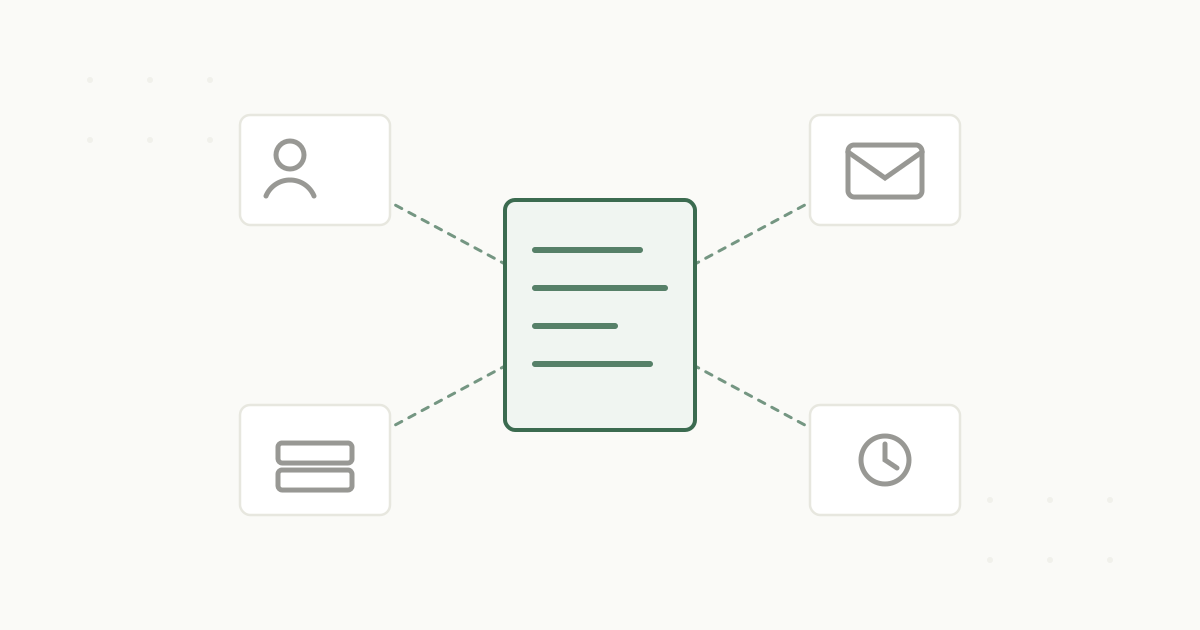
The connection between them is built on identifiers rather than duplicated data. A document links to a CRM record by that record’s identifier, a stable reference, not a copy of the record’s contents. The document system does not store its own authoritative version of the donor’s name; it points at the CRM record that owns it. So when the name changes in the CRM, there is nothing to reconcile in the document system, because the document system never claimed to own the name in the first place. It just points at whoever does.
This is what “two-way” should actually mean. Not two copies of the same data kept in nervous alignment, but two systems each owning their domain, connected by references that let a change on either side stay coherent. Documents can surface in the CRM, and CRM records can reach their documents, without either system holding a competing truth.
Practical rules that keep it clean
A few habits keep an integration from decaying into a sync mess.
Rules for a clean integration
Decide ownership explicitly. For every kind of information, name the one system that owns it, and make sure the other only references or reflects it.
Link by identifier, not by copying content. References survive change; copies drift into stale duplicates and orphaned links.
Let each system do its job. The CRM does not try to be the authoritative document store, and the document system does not try to own relationship data.
Ambiguity about ownership is where conflicts breed. When each system stays in its lane, there is nothing to fight over.
The payoff
Done this way, the integration stops being something you maintain and becomes something you forget about, in the good sense. Documents show up where they should, records reach their documents, and nothing drifts, because there was never a second source of truth to drift from. You get the benefit of connection without the tax of reconciliation.
Two systems, each owning their domain, linked by references, is how you sync without creating two truths. See how PaperlessZen™ links to your CRM and the wider stack, or read why your CRM is the system of engagement. When you want to see it, book a demo.