Your CRM is the system of engagement. What's your system of record?
Ask an advancement shop where their donor information lives and they will point to the CRM without hesitation. Ask where the signed gift agreements live, and the confidence evaporates. A drive, probably. Some in email. The old ones in boxes. The relationship has a clear home. The documents that define the relationship do not.
That gap is not a failure of your CRM. It is a sign that you are asking one system to do two different jobs, and it is only built for one of them.
Two jobs, two kinds of system
There is a useful distinction that clears this up. A system of engagement is where day-to-day work happens: the tool your team lives in, tracking contacts, interactions, and the moving relationship. A system of record is the authoritative home for a particular kind of information, the version you trust when copies disagree.
Your CRM is a system of engagement, and a good one. It is where gift officers work, where the giving history is tracked, where moves management happens. What it is not built to be is the authoritative, governed home for documents. It can store an attachment, but it was not designed to read documents, track the obligations inside them, make their full text searchable across decades, or govern their retention and access the way records demand.
So the question is not “CRM or document system.” It is “you have a great system of engagement; what is your system of record for documents.” For most organizations, the honest answer is that they do not have one, and the documents are scattered because of it.
Why the missing system of record hurts
When there is no authoritative home for documents, every document question has an uncertain answer. Which version of the agreement is current? Is this the signed copy or a draft? Was it amended? Where is the side letter? The information exists, but it is spread across systems and inboxes with no agreed source of truth, so answering takes a hunt and still ends in “we think so.”
It also means the CRM record is incomplete. A gift officer looking at a donor sees the giving history but not the actual agreements behind it.
The paper that governs the relationship is exactly what officers cannot see at the moment they need it.
How the two fit together
The fix is not to replace your CRM. It is to add the system of record it was never meant to be, and connect the two.
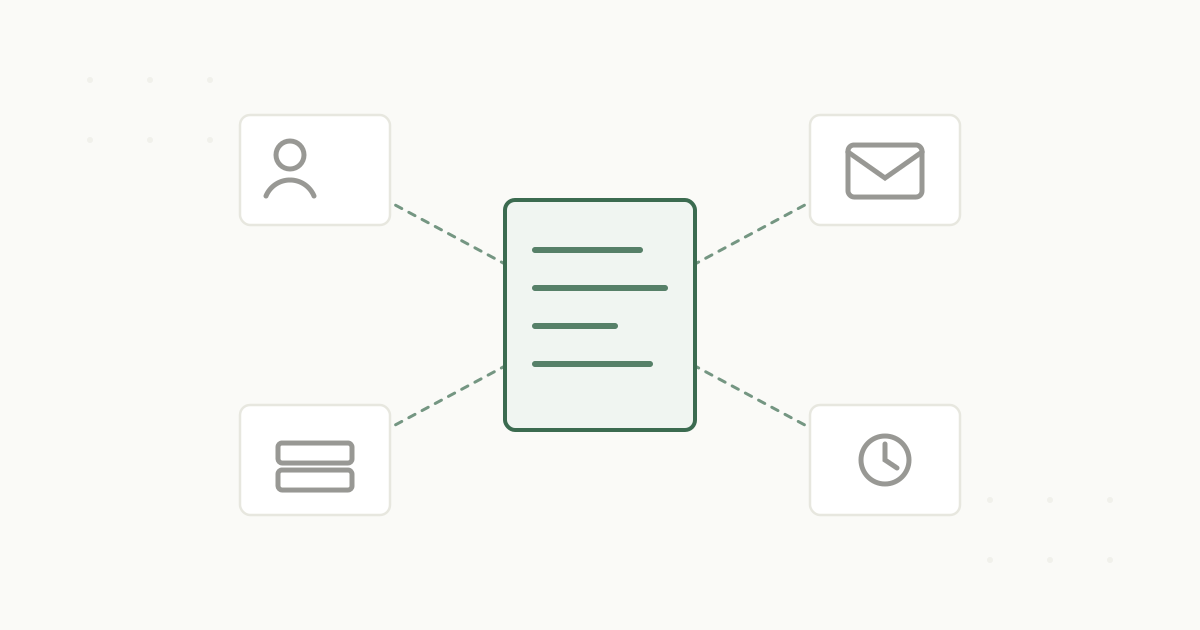
A document system of record keeps the agreements, side letters, amendments, and correspondence in their authoritative form: read, searchable, with obligations tracked and governance applied. Then it links each document to the record it concerns in your CRM, by identifier, so the two systems stay in step.
CRM as the only home
Which version is current is a guess
Signed copy or draft, nobody is sure
The donor record shows giving history but not the agreements behind it
CRM plus a system of record
One authoritative copy, read and full-text searchable
Obligations tracked, governance applied
Documents surface on the constituent record your team already uses
Done right, the documents show up on the constituent record inside the CRM your team already uses. The gift officer keeps working where they work, and the paper history is simply there when they need it. The CRM stays the system of engagement; the document system is the system of record; and the officer never has to know which is which, because the right document is on the right record.
The honest positioning
This is worth stating plainly because it is a positioning a lot of software gets wrong. A document system should not try to replace your CRM, and a CRM should not pretend to be your document system of record. Each is good at its job. The value is in the two working together: the relationship in one, the documents in the other, and a solid link between them.
So keep your CRM. It is your system of engagement, and it should be. Just answer the other half of the question honestly. If your documents do not have an authoritative, governed, findable home, you are missing a system of record, and it shows up every time someone cannot find the agreement behind the relationship. See how the two connect in integrations, or read about documents on the constituent record. When you want to see it, book a demo.